
The psychology behind life’s biggest decisions, and why visas are often the smallest part of the journey.
The biggest decisions in life rarely announce themselves.
They arrive quietly, disguised as ordinary choices. A phone call was postponed. A conversation delayed by one more quarter. A form left open in a browser tab for months, neither closed nor completed.
By the time most people realize they are standing at a crossroads, they have already been standing there for years.
This is not a story about visas. It is a story about how people make the decisions that shape their lives, and why the most important ones are so often the ones we avoid naming.
Over nearly two decades of sitting across the table from doctors, engineers, business owners, and investors, one pattern has appeared again and again. The people who come asking about immigration are almost never really asking about immigration. They are asking about something underneath it. Time they feel slipping. Children they are trying to protect from a future they cannot fully see. A version of themselves they built once and are now, quietly, trying to build again somewhere else.
The paperwork is simply where the conversation happens to land.
Ask a room full of executives what their biggest decision of the past decade was, and almost none will say immigration. They will say something closer to the truth: where to raise their children, how to protect what they built, what to do with the years still left to build something more. Immigration, when it appears at all, is usually the last step on a much longer list. The practical move that follows a decision already made somewhere quieter, months or years before.
A story, told the way it was lived
A business owner in his fifties sat across from us once. He had built something real over twenty years. The kind of success that takes over a life without asking permission. Every year, he meant to look into moving his family abroad. Every year, the business needed him more.
He wasn’t careless. He was simply busy succeeding.
Then his daughter graduated. He sat in the audience, proud, and felt something unexpected. Not joy alone. A quiet ache. The years he assumed would keep waiting for him had not waited. The opportunity he pictured for her, the one requiring years of lead time he never spent, had narrowed without asking his permission either.
He didn’t lose everything. But he lost the version of the plan that required starting earlier.
He told us afterward, simply: “I thought I had more time than I did.”
Nearly everyone we have worked with has said some version of that sentence.
Why capable people delay the decisions that matter most
There is a quiet irony in how competence works against us here.
The same discipline that builds a successful business, the ability to focus entirely on what is urgent, is the exact trait that causes long-term decisions to get pushed aside. Urgent things get attention because they announce themselves loudly. Important things, the ones with no deadline attached, get attention only when we finally build one for them. Usually too late. Usually under pressure.
Behavioral scientists call part of this present bias. We consistently overvalue today and undervalue the future, even when we know the future is coming. It isn’t a flaw unique to any one person. It is simply how the human mind is built to weigh time.
Add a second, quieter force. Every major life decision competes for the same limited attention as the decisions already demanding it today. A missed sales quarter feels urgent right now. A child’s education fifteen years from now does not. The mind chooses what is close over what is large.
This isn’t a character flaw. It is math the brain does automatically. And it almost always gets the math wrong for anything beyond a few years out.
The people who eventually act are not the ones who feel the most urgency. They are the ones who, at some point, forced themselves to look further out than felt comfortable.
There is a second pattern worth sitting with. A person who has spent twenty years becoming known in one country, one industry, one social circle, feels the pull to protect that standing even when a clear-eyed look would suggest it has stopped growing. It isn’t that they are wrong to value what they built. It is that the value of what was built and the value of what could still be built are two separate questions. Most people only ever answer the first one.
We have watched capable, intelligent people apply rigorous analysis to every business decision, then apply almost none of that same rigor to the biggest decision of their family’s life, simply because it felt too personal to analyze. The irony is that personal decisions deserve more discipline, not less. A missed business quarter can be recovered. A missed decade in a child’s education cannot.
The emotions underneath
Families often discover, somewhere in this process, that the decision they thought was about geography was actually about identity.
Who do we want our children to become? What does responsibility look like once we have already built something for ourselves? What do we owe the next generation, and what do we still owe the life we are living now?
These questions don’t have clean answers. That is precisely why they get postponed.
Fear plays its part too, though rarely the way people expect. It is rarely a fear of failure that stops a decision. Successful people have already faced failure and survived it. What stops them is something quieter. Fear of disrupting something that currently works. Fear of the unknown stretches between where they stand and where they are trying to go. Fear that stability, once left, cannot be rebuilt the same way twice.
This fear is not irrational. Change carries real cost. But the families who move forward are not the ones without fear. They are the ones who examined it closely enough to see what it was actually protecting, and decided whether that protection was still worth its price.
There is also hope, quietly tangled in all of this. Hope is a bet placed on the future without full information, which is exactly why it makes successful people uncomfortable. They are trained to decide only with complete data. But no long-term decision, in business or family life, has ever been made with complete data. At some point, careful analysis has to hand the decision to judgment. The families who handle this well are not the ones who eliminate uncertainty. They are the ones who made peace by carrying some of it forward.
Where immigration enters the story
Only now, after the psychology, does immigration itself belong in this conversation.
For the families we have worked with, immigration was never the decision. It was the mechanism through which several deeper decisions became real.
A parent choosing where their child will be educated is, underneath the paperwork, choosing what kind of adult that child will become. What language they will think in. What opportunities will feel natural to reach for, and which will feel foreign. An education system is not simply a curriculum. It is an environment that shapes how a young person learns to solve problems, take initiative, and imagine what is possible.
A business owner exploring investment-based pathways is often asking a larger question about where their capital will be treated with the greatest stability over the coming decades. Global mobility, for many entrepreneurs, has become less a luxury and more a form of diversification. Not unlike spreading a portfolio across markets rather than concentrating everything in one place.
A professional considering a move abroad is often asking whether the ceiling they have quietly sensed at home is a permanent structure, or simply the edge of one particular market. For many, it turns out to be the latter.
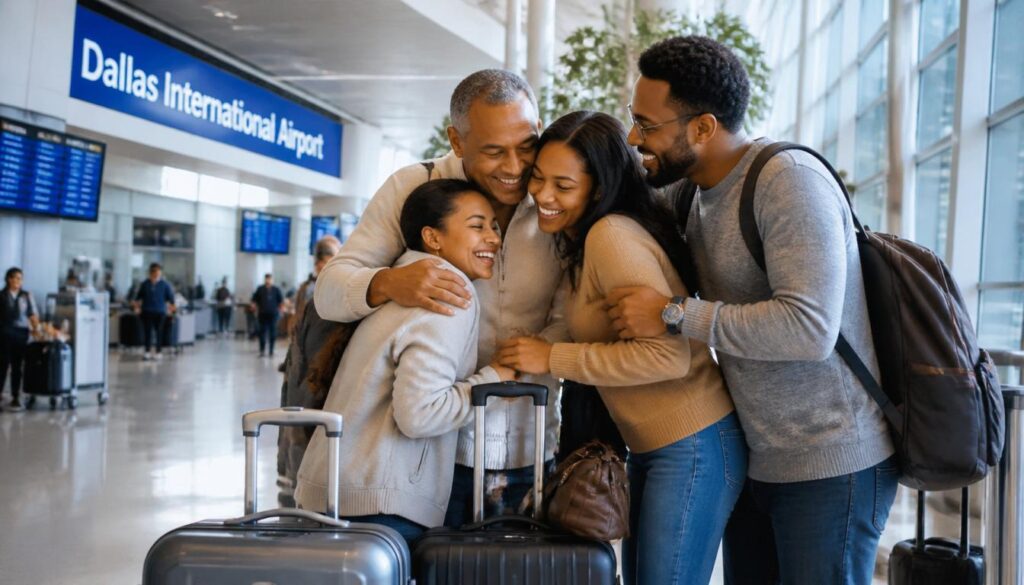
Family unity sits beneath nearly every conversation we have, though it rarely gets named directly. Parents wanting to be near children who have already moved. Grandparents wanting to know their grandchildren beyond a video call twice a year. These are not small motivations. For many families, they are the central one, quietly present beneath every more practical reason offered aloud.
And underneath almost everything sits legacy. Not in a grand or sentimental sense. The practical question every parent eventually faces: what am I actually building, and who is it for? A business built without a plan for the next generation is, in a sense, unfinished. A family scattered across borders without a coordinated plan is more fragile than it needs to be.

On timing
One truth surfaces in nearly every long conversation we have had with a family: the right time rarely feels obviously right.
There is always a reason to wait. A deal not yet closed. A child not yet old enough to understand. A market not yet stable enough to leave. These reasons are not imagined. They are often true.
But the cost of waiting is rarely calculated as carefully as the cost of acting. We measure the risk of moving forward in vivid detail. We measure the risk of standing still hardly at all, because standing still doesn’t feel like a decision. It feels like nothing is happening.
It is, of course, a decision. Simply the one that happens by default.
The families who handle this well are not the fastest. They are the most deliberate. The ones willing to sit with a difficult question long enough to answer it honestly rather than conveniently. What we have learned to watch for is not hesitation itself, which is often wise, but hesitation that has quietly become permanent. The difference between the two is usually just one honest conversation, had a little earlier than feels comfortable.
A closing thought
Perhaps this is the real insight, worth carrying forward long after any specific plan has been made or set aside.
The decisions we call practical are almost always, underneath, decisions about who we are and who we hope our children become. Immigration is simply one of the more visible forms this takes. But the pattern is the same everywhere. Every major life choice is smaller on the surface than it is underneath.
For nearly two decades, MY-VIET has learned that immigration is rarely about paperwork alone. Every family arrives with a different story, different hopes, and different responsibilities they are quietly carrying. Our role has never been simply to prepare documents. It has been to sit with people while they think clearly about what they are actually deciding, so that whatever they choose, they can begin their next chapter with a little more clarity, and a little more peace of mind.
The visa, in the end, is just a piece of paper.
What it represents is not.