
Immigration is not paperwork. It is trust, filed in triplicate.

18+ YEAR | 48+ COUNTRIES | 250+ UNIVERSITIES | 6 SECTORS | IMMIGRATION | INVESTMENT | EDUCATION | TEXAS-BASED |
18+ YEAR | 48+ COUNTRIES | 250+ UNIVERSITIES | 6 SECTORS | IMMIGRATION | INVESTMENT | EDUCATION | TEXAS-BASED |
Overview
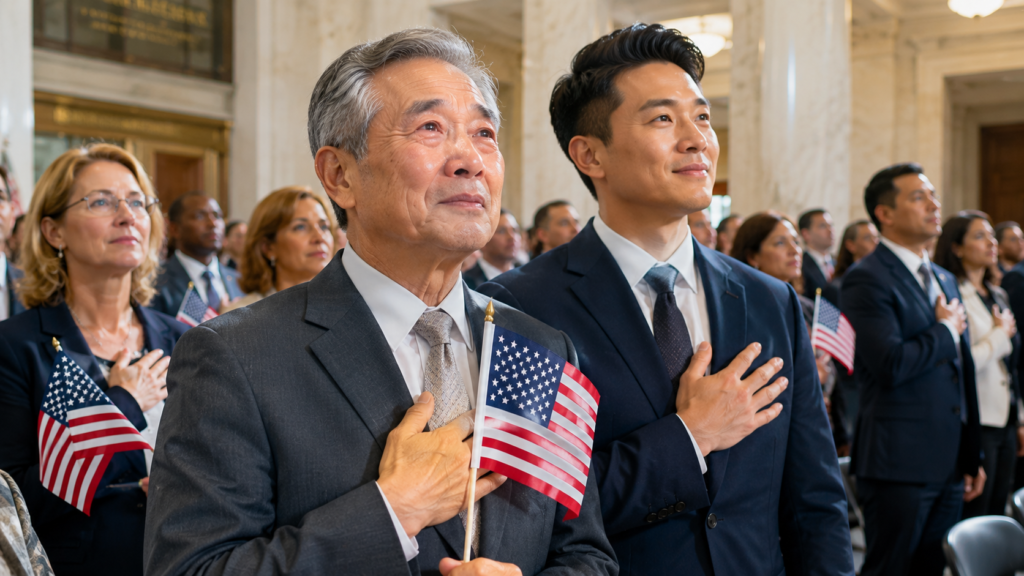
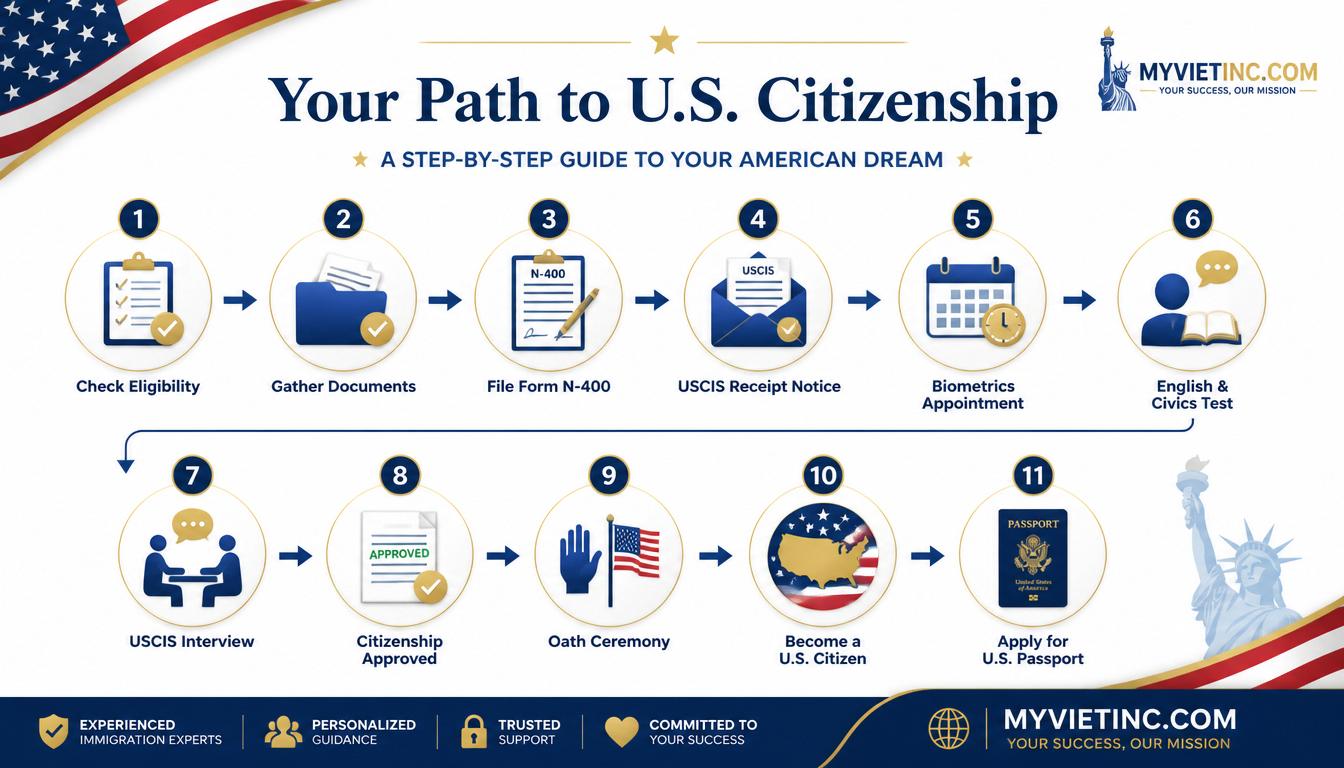
Naturalization is how a permanent resident becomes a US citizen. It is the final step, and it is permanent. Form N-400 requires proof of residency, physical presence, good moral character, and an interview covering your history, your English, and your knowledge of US civics.
One error in your travel history. One gap in your tax record. One answer that does not match your form. This step is about getting every detail right, once, so nothing stands between you and citizenship.
After filing, USCIS schedules biometrics, an interview, and a civics and English test. Applicants who pass take the Oath of Allegiance and receive their Certificate of Naturalization. At that moment, they are citizens.
MY-VIET, INC. prepares N-400, N-600, and N-600K citizenship packages for applicants in Dallas, Houston, Garland, Plano, Arlington, and nationwide. Below, you will find each process, the documents you need, common mistakes, and answers to frequent questions.
You may file up to 90 days before your 5-year (or 3-year) anniversary date. Most applicants do not know this and wait longer than they need to.
Overview
If your parent was a U.S. citizen when you were born abroad, or if your parent naturalized while you were under 18 and living in the United States as a permanent resident, citizenship may have passed to you automatically. You did not apply for it. It happened by law.
Form N-600, Application for Certificate of Citizenship, is the official document that proves it. MY-VIET, INC. prepares N-600 and N-600K packages for applicants in Dallas, Houston, Garland, Plano, Arlington, and nationwide.
USCIS is not granting you citizenship through Form N-600. It is confirming what is already true. Two situations create this: citizenship acquired at birth through a citizen parent, or citizenship derived automatically when a parent naturalizes while the child is under 18 and a permanent resident. Form N-600K covers children residing abroad with a U.S. citizen parent, processed through a U.S. embassy or consulate.
The law that applies to your case depends on when you were born or when your parents naturalized, not current law. Rules changed in 1934, 1940, 1952, 1972, 1978, and again in 2000. Getting this right is the first and most important step.
REQUIRED DOCUMENTS
Every case is different. We review your specific situation before preparing anything.
Common Challenges
Becoming a U.S. citizen is more than completing Form N-400. USCIS reviews your entire immigration history, eligibility, and background. Small mistakes or missing information can delay the process or lead to additional questions.
Filing too early can result in delays or denial if you have not met the continuous residence or physical presence requirements.
Extended trips abroad may affect your eligibility for naturalization.
Differences in names, dates, addresses, employment history, or travel records can trigger additional review.
Previous visa denials, immigration violations, removal proceedings, or prior applications must be reported accurately.
Even cases that were dismissed or resolved should be disclosed with the required court documents.
Missing green card copies, tax records, Selective Service documentation (when applicable), or legal records can delay your application.
USCIS regularly updates its forms and filing requirements. Using the wrong version may result in rejection.
Incomplete forms can lead to rejected applications or unnecessary delays.
Unpaid taxes or failure to file required tax returns may raise questions about eligibility and good moral character.
Failure to meet legal financial responsibilities may affect the good moral character requirement.
Missing scheduled appointments without proper notice can significantly delay your case.
Many qualified applicants become unnecessarily anxious because they underestimate the interview and testing process.
Long trips abroad, prior immigration issues, criminal history, unpaid taxes, or other complex circumstances often require additional documentation and explanation.
OUR APPROACH
Every immigration journey is different. Our role is not simply to prepare forms. It is to understand your situation, catch problems early, and help you submit a case that is complete, accurate, and clear.

Every case begins with a conversation. We take time to understand your goals, immigration history, family situation, and any circumstances that could affect your case. The more we understand from the beginning, the better we can prepare.

We explain your available options, eligibility, required documents, expected timelines, and any challenges we identify. If there is a concern, we believe it is better to discuss it before filing, not after.

We organize your forms, supporting documents, certified translations, and evidence to help ensure your application is complete, consistent, and meets current USCIS requirements before submission.

Consular processing coordination and NVC document submission supportAfter filing, we help you understand USCIS notices, respond to requests for additional information, and prepare for interviews or the next steps in your immigration process.

Many clients return for Green Card renewals, removal of conditions, U.S. citizenship, petitions for other family members, or additional immigration services. We are grateful to support families through every stage of their immigration journey.

Immigration is not paperwork. It is one of the biggest decisions of a person's life, one that touches family, safety, and the future. Our goal is simple: help you move forward with clarity, careful preparation, and someone trustworthy beside you at every step.
FAQs
Frequently Asked Questions
About Family Petitions
Most permanent residents must wait 5 years from the date printed on their green card. Spouses of U.S. citizens who have been married and living with that citizen for at least 3 years, where the spouse has been a U.S. citizen throughout, may file at 3 years. You may file up to 90 days before either anniversary date. Do not wait until the exact date.
Continuous residence means you have lived in the United States throughout the required period without abandoning your residency. A single trip outside the U.S. lasting more than 6 months may break continuous residence and restart the clock. A trip of more than one year almost always breaks it. We review your complete travel history before preparing any application. If there is a potential problem, we will tell you before you file.
Separate from continuous residence. For the 5-year track, you must have been physically present in the U.S. for at least 30 months out of the 60 months before filing. For the 3-year spousal track, 18 months out of 36. Every day counts. Multiple shorter trips can reduce your physical presence total even if none broke continuous residence. We calculate this carefully.
USCIS provides a list of 100 official civics questions about U.S. history and government. At the interview, the officer asks up to 10. You must answer at least 6 correctly. The list is public and we walk you through it before your interview. Applicants 65 or older who have held a green card for 20 or more years take a shorter version of the test.
USCIS gives you one opportunity to retest, typically within 60 to 90 days. If you pass the retest, the application moves forward. If you fail a second time, USCIS denies the application. You can refile, but the fees and waiting time start over. This outcome is avoidable. Preparation matters, and we help with that.
Applicants who are 50 years or older and have held a green card for at least 20 years may take the civics test in their native language with an interpreter. The same applies to applicants who are 55 or older with at least 15 years of permanent residence. Applicants with certain medical or developmental conditions may also qualify for a full exemption using Form N-648.
USCIS reviews your conduct during the statutory period before filing. Certain criminal convictions are permanent bars to naturalization. Others are evaluated based on the circumstances. Tax delinquency, failure to pay child support, and other issues can also affect this finding. Omitting something that USCIS already has in your record is worse than the issue itself. We review your history honestly and connect you with an immigration attorney when the situation requires it.
Possibly. It depends on the nature of the arrest, the charge, and the outcome. Every arrest must be disclosed on the N-400 regardless of whether charges were filed, whether you were acquitted, or how long ago it occurred. Some offenses are absolute bars. Others are reviewable. We assess your history and tell you clearly whether we can help or whether you need an immigration attorney.
USCIS schedules a biometrics appointment a few weeks after receiving your N-400. The appointment takes about 15 minutes. A technician takes your fingerprints and a photo. USCIS uses this information to run a background check. You do not need to prepare anything. Attend with your appointment notice and a valid ID.
A USCIS officer reviews your N-400 in detail, asks questions about your background and travel history, administers the English reading and writing test, and gives you the civics questions. The interview is usually 20 to 30 minutes. The officer may approve the application at the end of the interview or notify you by mail that a decision is pending. If the officer continues the case to review additional information, that is not a denial. We walk you through what to expect at every stage.
If your child is under 18, holds permanent resident status, and lives with you, they may automatically acquire U.S. citizenship on the day you take your Oath of Allegiance, under the Child Citizenship Act of 2000. You do not file a separate application for this to happen. It is automatic. You can then apply for a Certificate of Citizenship or a U.S. passport for your child to document the status. This is one of the most meaningful parts of naturalization that many families do not find out about until after the fact.
Yes. The moment you receive your Certificate of Naturalization at the oath ceremony, you are a U.S. citizen and may apply for a U.S. passport. You do not need to wait. Bring your Certificate of Naturalization to a passport acceptance facility. Many clients apply the same week.
Owing taxes does not automatically disqualify you, but it raises a good moral character flag. If you are enrolled in and currently on an IRS payment plan, most USCIS officers will accept that. If you have unfiled returns, address them before filing the N-400. We review your tax situation during the consultation.
Most cases filed through the Dallas and Houston USCIS field offices take between 8 and 18 months from filing to oath ceremony. Processing times vary by office and current caseload. We give you a realistic estimate based on your location at the time of consultation.
Reasons
Why Families Choose MY-VIET, INC.
Immigration cases are not paperwork. They are years of waiting, family separations, and fear of one small mistake costing everything. We have sat with that fear for 18 years, across thousands of cases, and we know what it does to a person.
Most of our clients come through referrals. It is something we earn, slowly, over years of showing up for people when it matters most.
Supporting families and professionals through immigration and international education — one case, one family, one future at a time.
Traveled not as a tourist but as a student — of how trust is built, how trade moves, and how cultures make decisions.