
Why calm people make the clearest decisions when life becomes uncertain.
When important decisions arrive, the loudest voice in the room is almost never the wisest one.
It’s the most anxious one.
Urgency sounds like clarity. Especially right then, when it hits. It moves fast. It sounds sure of itself. And it drowns out the quieter voice that noticed what the rush missed.
I’ve spent twenty years sitting across tables from families, entrepreneurs, investors, and executives facing their biggest decisions. One pattern shows up again and again. It’s not the smartest person who decides best. It’s the calmest one.
This matters. People think intelligence and calm are the same thing. They’re not. I’ve watched brilliant minds make terrible decisions under pressure. And I’ve watched people with ordinary minds make steady ones. The difference was never what they knew. It was what they could see, when it mattered most.
This is about that quiet advantage. Where it comes from. Why does it changes almost everything.
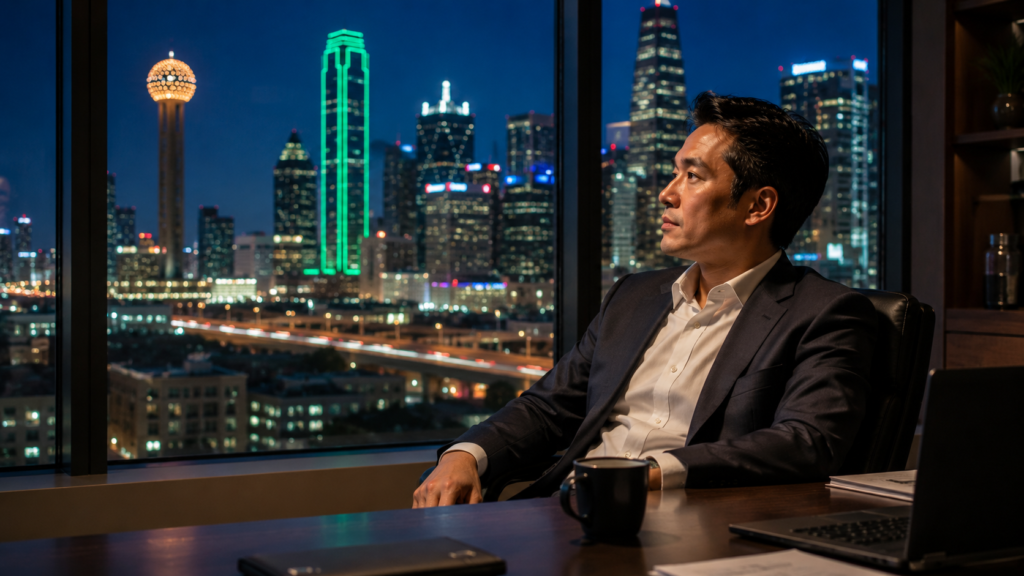
Two entrepreneurs, one uncertain year
Two business owners. Same market shift. Same season. Same resources. Same years of work behind them.
One moved fast. Cut costs. Pushed contracts. Made decision after decision to grab back control of something that felt like it was leaving. Some decisions helped. Others, made in panic, opened doors that stayed open for years.
The second one waited. Gathered facts. Kept the business moving. Didn’t make announcements. Didn’t rush to look like he had all the answers.
When he acted, he solved one real problem. Not ten imagined ones. It cost less. Much less.
Both had courage. Both had brains. The real difference was this. One made decisions to calm himself down. The other made decisions to solve what was actually broken.
One cost him money. The other protected him. Quietly.
What calm people actually see
Some people think calm is just personality. Like some people are born relaxed and others aren’t. That’s not what I’ve seen.
The calm people I’ve watched make good decisions and don’t feel any concern. They feel it. But their mind stays open. Wide. An anxious mind shuts down. It narrows. It focuses only on what feels dangerous right now. Everything else disappears.
A calm mind keeps the whole picture. It looks at what’s urgent and everything around it at the same time.
This creates real advantages. Things are easy to miss unless you’ve watched people get hurt by not having them.
Calm people ask better questions. They don’t rush toward an answer just to feel better right now. They listen longer. Past the point where an anxious person would already be thinking about what to say next. They separate facts from feelings. Not because they feel less. Because they notice the difference between what’s actually happening and what their nervous system is telling them is happening. And they think in years instead of days. That changes what details feel worth acting on.
This doesn’t make them passive. It makes them accurate. A decision made from real information holds up better over time than a decision made fast to stop the pain.
There’s another thing. One that becomes clear after watching enough decisions over enough years. Calm people notice what’s missing. Not just what’s there. An anxious mind focuses on information right in front of it. A calm mind keeps enough space to notice the gap. The question nobody asked yet. The assumption everyone accepted without thinking about it.
Some of the most expensive business decisions I’ve seen weren’t because of bad information. They happened because of a missing question. Nobody had the composure left to ask it.
Can calm be learned
Some people think calm is something you’re born with. You have it or you don’t.
That’s not true.
Every calm decision maker I’ve worked with told me the same thing. At some point, they used to react fast and regret it. All the time. What changed wasn’t who they were as a person. It was habits. Small ones. Repeated until they became natural.
They learned to notice the physical feeling of urgency. That tightness. That pull toward action. And they learned to treat it as information, not instruction. They learned to separate the first answer that came to mind from the best answer available. These are almost never the same, especially in the first few minutes after bad news arrives. They learned to build a pause into decisions that don’t actually need speed. One day. One conversation. Just enough time for the initial reaction to settle before it hardens into action.
This didn’t take unusual willpower. It took repetition. Calm is like any skill. It gets stronger when you use it. It gets weaker when you don’t.
The quiet pull toward panic
We need to be honest about why calm is hard to keep, especially when decisions matter most.
Fear narrows attention on purpose. This isn’t a flaw in how we’re built. It’s an old survival system. Built for moments when you needed to move fast physically. Not for the slower decisions that shape modern life. A business restructure. A family’s next decade. The system doesn’t know the difference. It treats a threatening email like a physical danger. And it narrows your thinking the same way.
Urgency makes this worse. The second a decision feels time-sensitive, the mind looks for the fastest answer instead of the best one. Scarcity thinking comes next. The feeling that an opportunity, once missed, is gone forever. Which almost never feels as true later as it does right now.
Social pressure adds weight. Watching other people move fast creates a physical urge to move fast too. Even when speed doesn’t help. And underneath everything sits the strongest pull: the need for certainty. The desire is so strong people will choose a worse decision they feel sure about over a better one that requires sitting without knowing.
These aren’t character flaws. They’re just the default settings most of us work against. We don’t even notice we’re doing it. And it happens at the exact moments it matters most.
There’s one more pull. Quieter than the others. Comparison.
Watching someone else’s timeline, someone else’s progress, someone else’s decision, creates urgency in decisions that aren’t actually urgent. A family hears another family already moved, already enrolled their kids, already solved the very problem they’re sitting with. The comparison alone manufactures pressure that has nothing to do with their situation. Few decisions actually need to match someone else’s timeline. Most just feel that way because someone else’s timeline became visible first.
Life doesn’t ask us to be fearless. It asks us to stay thoughtful longer than feels comfortable.
What replaces the pull
The opposite of panic isn’t feeling nothing. It’s a different relationship with the feeling. One that lets you act without letting urgency run the show.
Patience isn’t passivity. It’s the willingness to gather information before you act so the eventual action is actually right. Reflection isn’t indulgence. It’s separating what’s true from what fear is insisting must be true. These feel identical in the moment. They’re usually different when you look closer.
Preparation matters more than almost anything because a person who has thought through possible scenarios ahead of time doesn’t panic when one shows up. They recognize it.
Perspective helps too. The habit of asking: How will this look in five years instead of five days? That question quiets a lot of noise just by changing the timeframe your mind measures against.
And conversation. Real conversation. Unhurried. Between spouses, partners, or people you trust. It does something thinking alone can’t do. It slows the decision down just enough for clearer thinking to catch up with the urgency that triggered it.
Clear decisions come from quiet minds. This isn’t poetry. It’s how good judgment actually works.
What business teaches about uncertainty
Entrepreneurs live with uncertainty because their job offers no other option.
Successful business owners don’t eliminate it. Anyone who’s spent time around markets knows that’s impossible. What separates entrepreneurs who build lasting companies from those who don’t isn’t their ability to predict the future better. It’s their ability to think clearly while standing inside a future they can’t see.
Markets move without warning. Technology reshapes entire industries in a handful of years. Opportunities appear without notice and disappear if nobody’s paying attention. Leaders who stay calm through this aren’t calm because they know more than their competitors. They’re calm because they’ve trained themselves to keep watching, keep observing, even when everything around them is pushing toward fast, emotional reaction.
We’ve watched this play out across companies and market cycles. It’s a pattern, not coincidence. The businesses that survive a hard year aren’t led by the person who reacted fastest. They’re led by the person who kept their attention wide enough to notice the detail that mattered before everyone else did.
The strongest leaders are the calmest observers. Not the loudest ones.
What families teach about calm
Parents are under a particular kind of pressure. It deserves its own attention because the stakes are real.
Anxiety in a parent isn’t a character flaw. It’s proof of how much they care. A parent who feels no concern about their child’s future isn’t calm. They’re not paying attention. The real distinction is: What do they do with that concern once they feel it?
Children do better in households that feel calm than ones that feel certain. Certainty isn’t really available to most families making a big decision. And children sense when adults are faking confidence they don’t actually feel. What children respond to is composure. The sense that even when parents don’t have every answer, they’re handling things with a steady hand, not a frantic one.
Families make better long-term decisions when their conversations get quieter, not louder. This is easy to say. It’s hard to actually do. Especially when the decision touches your child’s education, your family’s money, or a move that will reshape daily life. But the families I’ve watched navigate these well aren’t the ones with the fewest disagreements. They’re the ones who keep disagreements calm enough that the conversation can actually continue instead of collapsing into a decision made just to stop the discomfort of disagreeing.
I’ve also noticed something quiet and easy to miss without watching many families over many years. Children remember the tone of a difficult conversation longer than what was actually said. A decision explained calmly, even one a child didn’t want, gets accepted with way less resistance than the same decision delivered with visible anxiety. Kids seem to read the emotional temperature of a decision before they process the details. And that temperature shapes how willing they are to participate in what comes next.
Where immigration enters this pattern
Immigration decisions create exactly the conditions that make calm hard to keep.
Paperwork arrives with deadlines. Processing times shift without warning. Regulations change in ways you can’t predict. Waiting periods stretch on with no end date. All of this tests the patience of even the most prepared applicant. It’s one of the most uncertain processes a family will navigate. And uncertainty like this produces the panic this essay has been describing.
What we’ve observed is this: these situations reward preparation way more than they reward urgency. Families who prepare early, who gather documentation calmly, who treat delays as a normal part instead of a personal emergency, arrive at better outcomes than families who let each unexpected delay trigger another wave of anxious decisions.
Patience doesn’t solve every obstacle. Some situations actually require fast action. Calm people aren’t slow people. But fast decisions are better when they come from preparation instead of panic.
Thoughtful planning sustained over months or years creates more options for a family than emotional urgency does. Because urgency narrows choices to what feels immediately available. While patience keeps a wider set of paths open longer.
Families who navigate this well are not the families with the fewest obstacles. They’re the families who kept their attention wide and their conversations calm enough to notice which obstacles actually mattered and which just felt urgent.
The difference between responding and reacting
At the center of all of this is one distinction. It explains more than anything else here.
Reacting happens fast, driven by whatever feeling is loudest right now. It feels productive because it produces motion. And motion gets mistaken for progress. Responding happens deliberately. It still involves action. Sometimes fast action. But the action follows observation instead of replacing it.
Calm people still act. Decisively. Quickly. With urgency when circumstances actually demand it. The difference isn’t speed. It’s a sequence. They observe first and then act. Not the other way around.
This distinction separates decisions that hold up over time from decisions people spend years quietly regretting. A reaction solves the discomfort of right now. A response solves the actual problem. These feel identical in real time. They’re very different when you look back.
Why this matters more than it appears to
It would be easy to dismiss all of this as an interesting observation about personality. That would be a mistake.
The quality of our decisions, across immigration, business, parenting, investing, reflects the quality of our attention at the moment the decision was made. This is a simple claim. And it holds. It holds across industries. Across cultures. Across every kind of family we’ve worked with over two decades.
The people who see clearly decide wisely. Not because they possess some rare gift. But because they’ve built the discipline to keep their attention wide and their minds quiet at the exact moments when others let both narrow.
This discipline is available to anyone willing to practice it. That’s the most hopeful part of this observation. It requires no special talent. It requires the willingness to pause longer than feels comfortable. To ask one more question before reacting. To separate what’s true from what urgency insists must be true. And to keep talking, with the people a decision will actually affect.
A closing reflection
The greatest advantage in uncertain times is not knowing more than everyone else.
For two decades, MY-VIET has walked beside families, entrepreneurs, professionals, and investors during life’s most important decisions. We’ve learned that while regulations change and circumstances shift, thoughtful preparation and calm judgment remain timeless.
It’s remaining calm long enough to see what actually matters.