
The hidden habits shared by families who transition smoothly across countries.
The families who appear fortunate ten years from now usually made their most important decisions long before anyone noticed.
Nobody was watching. There was no announcement. No dramatic turning point worth telling at a dinner party. There was simply a quiet decision, made early, that gave the family more room to move than the families around them.
Over nearly twenty years of working alongside families building new chapters in new countries, one pattern has stood out above every other. The families who thrive are rarely the wealthiest. They are the ones who started thinking further ahead than everyone else, usually years before circumstances required it.
What they share is not luck. It is not even talent. It is a particular relationship with time.
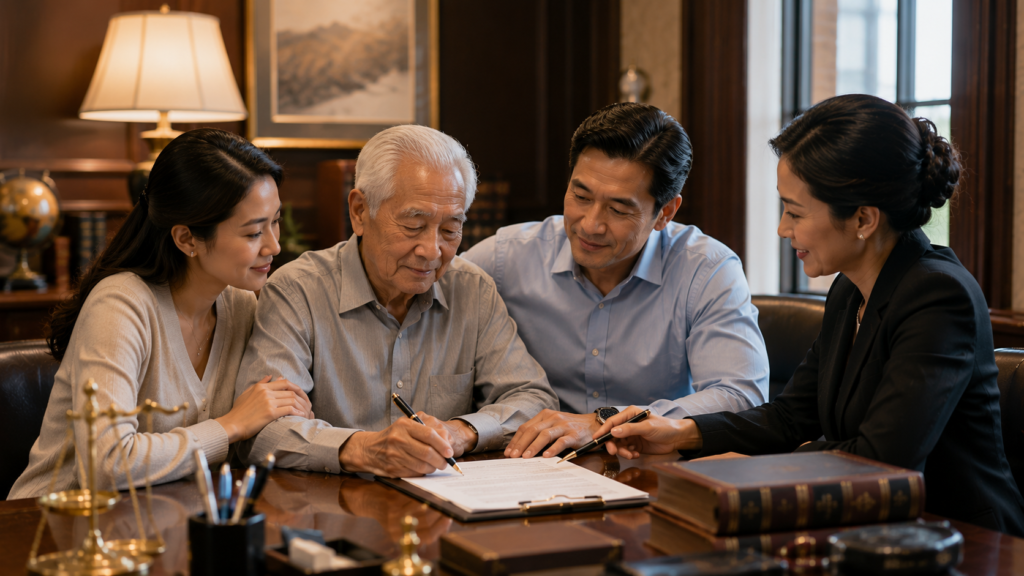
Two families, one decade
Two families once lived a few streets apart. Similar income. Similar education. Similar hopes for their children.
One family began, quietly, to prepare. They saved with a longer horizon in mind. They enrolled their children in a second language a little earlier than felt necessary. They kept their documents organized, not because anything was imminent, but because it seemed sensible. They had honest conversations, once a year, about where they hoped to be in ten years. Not detailed plans. Just honest conversations about what they wanted their life to look like.
The other family postponed these conversations. Not from carelessness. Life simply stayed full. There was always a nearer priority. A school event. A work deadline. A season that passed before anyone noticed it had.
Ten years later, both families were still doing well. But their choices looked different. One family had options in front of them. Real options, with time to consider them. The other family was working harder to create the options the first family already had.
Neither family did anything wrong. One simply started the conversation earlier.
That earlier start is almost everything.
A different question
Families who plan well rarely begin by asking what paperwork they need.
They begin by asking a quieter question. What kind of life do we hope our children will have in ten years? What opportunities should exist for our family that do not yet exist? What values do we want to survive across generations, regardless of which country we call home?
These questions rarely produce an immediate answer. That is precisely their value. They shift the family’s attention from the next twelve months to the next decade. From the urgent to the important. From what is in front of us today to what we are actually building toward.
My observation has been that families who ask these questions early tend to make smaller, calmer decisions along the way. They are not deciding all at once, under pressure. They are deciding in pieces, over time, while each piece is still manageable. Families who avoid the questions tend to make one large, urgent decision later, under considerably more pressure, with considerably less room to adjust if something does not go as planned.
There is a reason this order matters. A small decision, made with time to think, can be revisited the following year if circumstances change. A large decision, made under pressure, rarely allows for that kind of correction. It simply has to work. Because there is no longer enough time left to try again.
The hidden habits
Across many families, in many industries and countries, certain habits appear again and again. None of them looks remarkable on its own. Together, they compound into something significant.
These families prepare before preparation feels necessary. They begin improving a second language years before it becomes useful, while it still feels optional. They build relationships across borders slowly, through years of small interactions rather than one deliberate networking effort. They come to understand more than one culture, not as tourists, but as people genuinely curious about how others think and live and solve problems.
They keep financial and legal records organized as a matter of habit, not urgency. They build flexibility into their plans rather than committing entirely to one path. They diversify where their opportunities exist, much as a careful investor diversifies capital across different markets rather than concentrating everything in one place. And perhaps most importantly, they make major decisions together, as a family, rather than leaving one person to carry the weight of the decision alone.
None of these habits requires wealth. Most require only the discipline to begin early, and the patience to continue quietly, in the years when no one is watching and nothing visible seems to be happening.
What stands out, watching this pattern repeat across very different households, is how ordinary each individual habit looks. A weekly hour of language practice. A folder of documents kept current. A yearly conversation about where the family hopes to be. None of these would make an interesting story on their own. It is only after a decade that their combined effect becomes visible. And by then, it looks less like habit and more like foresight.
The families who did the work know better. They know it was simply habit, practiced early, practiced quietly, practiced in the years when it still felt unnecessary.
Education as the earliest investment
For most families, education is the first long-term decision they make, often before they realize how long-term it truly is.
Good education is not only about which school a child attends. It shapes how a child learns to think, how comfortable they become with uncertainty, and how naturally curiosity and confidence sit within them as they grow. A second language learned early becomes part of how a child reasons, not simply something they translate in their head. Exposure to different ways of solving problems, offered early, tends to produce adults who adapt easily rather than adults who find change unsettling.
This matters more than most people realize in the early years. The child who grows up comfortable with ambiguity does not become that way at twenty-five. They become that way at eight, at ten, at twelve, in the years when their sense of what is normal is still being formed. The environments they occupy during those years shape that sense of normal in ways that are very difficult to alter once they have solidified.
Families often discover this only in hindsight. The child who began earlier adjusts with surprising ease. The child who began later works harder for the same result, through no fault of their own, simply because the window for effortless adaptation was smaller by the time they entered it.
This is not a reason for guilt. It is a reason for starting earlier than feels necessary.

Children grow faster than plans do
It is easy to underestimate how quickly a window closes.
The opportunities available to a six-year-old are simply different from the opportunities available to the same child at sixteen. Not better or worse as a person. Just different, in terms of what is still easy to build and what now requires considerably more effort. Adaptability, language, and confidence are more easily built early. The brain is more plastic. The identity is more open. The world is still large enough that a new version of it does not feel threatening.
This is not a judgment on any family’s timing. It is simply the nature of childhood, which moves forward regardless of when the adults around a child feel ready.
Parents rarely notice this in the moment. They notice it later, looking back, recognizing that the years they assumed would wait for them did not wait. The years kept moving. And the child they were raising moved with them, quietly becoming someone whose path had already, in many small ways, been shaped by the decisions made and the decisions postponed.
The entrepreneur’s timeline
Successful business owners rarely think in a single year. They think in five, ten, twenty-year horizons, weighing decisions today against markets and opportunities that do not yet fully exist.
This is not a natural way to think. It requires practice. It requires making a deliberate choice, repeatedly, to look past the immediate problem toward the landscape that problem exists within. Entrepreneurs who develop this instinct in business often find it begins to apply everywhere, including at home.
The same quality that builds a lasting company tends to build a lasting family plan. International expansion, succession planning, professional networks spanning multiple countries, these all reward one thing above all others: the willingness to prepare years before the opportunity becomes obvious to everyone else.
Entrepreneurs who apply this thinking to their businesses and forget to apply it to their families often find, later, that one grew more deliberately than the other. The business had a five-year plan. The family had the current year. And the years inside that gap, the ones without a plan, passed the same way years always pass. Quickly. Without asking permission.
There is something worth naming here, because it comes up often in conversations with successful business owners. The skills they built to succeed in business, the ability to analyze, to plan, to manage risk, to build relationships patiently, are exactly the skills that would serve their family’s future well, if applied. The reason they are not applied is rarely that the person lacks the skill. It is that they have not yet framed the family’s future as something deserving the same quality of attention they give the business. Once that framing shifts, the planning tends to follow. The tools were always there. It was only the direction of attention that needed to change.
More than financial assets
The families who transition well across countries build more than financial security, though financial security matters enormously.
They build human capital. The skills, the language, the adaptability their children carry with them anywhere in the world, regardless of what changes around them. They build social capital. Relationships and trust developed over years rather than assembled quickly when needed, because relationships assembled quickly when needed rarely have the depth to hold under real pressure. They build cultural capital. The ability to move comfortably between different ways of living without losing their own identity in the process.
This last one is often underestimated. There is a fear, among many parents considering a major relocation, that raising children across cultures will leave those children uncertain of who they are. In our experience, the opposite is more often true. Children who grow up understanding two cultures well, and guided thoughtfully, tend to gain confidence rather than confusion. They learn, at an age when it still shapes them, that identity can hold more than one place at once. That belonging to one thing does not require rejecting another. This is not a small lesson. It is one that stays with a person for a lifetime, and tends to make them more effective in nearly every environment they encounter.
The combination of financial resilience alongside human, social, and cultural capital is what allows a family to move well, not simply to move. To arrive somewhere new and build, rather than arrive and spend years recovering from the difficulty of the transition itself.
A different mindset
At the center of all of this sits a mindset, not a strategy.
Families who plan well are comfortable delaying comfort today for options many years later. This sounds simple. It is not. It requires a particular kind of trust in the future, a belief that the work being done now will matter in a decade, even when the decade is too far away to see clearly. That trust is not certainty. It is something quieter. A willingness to move in a direction without needing the destination to be visible yet.
These families prepare quietly, without needing an audience or a deadline to act. They stay curious rather than certain, willing to keep learning about places and systems they have not yet needed to understand. They remain adaptable, treating each plan as a direction rather than a fixed outcome. When circumstances change, and circumstances always change, they adjust the plan rather than abandoning the direction.
This is perhaps the most important quality of all, and the hardest to teach. The willingness to hold a long-term intention lightly. To be committed to the direction without being rigid about the path. To keep making small decisions, year after year, even when the larger picture is not yet clear.
None of this requires certainty about the future. It requires only a willingness to take the future seriously, before it arrives and removes the luxury of thinking about it calmly.
One last thing worth saying, because it is the part most easily missed. Planning a decade ahead does not mean predicting the decade. It means showing up to the decade prepared, so that when things unfold in ways you did not expect, and they always will, you have enough room to adjust without starting over. The families who do this well are not the ones who got every prediction right. They are the ones who stayed in motion, stayed in conversation with each other, and kept adjusting quietly, year after year, in the direction they had agreed mattered most.
Where immigration enters
Immigration, when it appears in this story, is simply one expression of everything described above. It is rarely the beginning of a family’s planning. It is usually the visible result of planning that began years earlier, in quiet conversations and small decisions most people around the family never noticed.
Family immigration decisions tend to go smoothly when they follow naturally from a family that has already been thinking in decades. Already organizing documents. Already discussing values and education and opportunity long before any deadline required it. The process still carries uncertainty. The paperwork is still real. But the family entering it with years of preparation behind them experiences something very different from the family entering it under pressure, trying to understand the options and make the decision at the same time.
Business immigration follows the same pattern for entrepreneurs who have already been building relationships and readiness across borders. Education pathways, investment timing, and eventual long-term planning all become simpler once they sit inside a longer, more deliberate framework rather than arriving as isolated, urgent decisions that each need to be solved from scratch.
The paperwork, in every case we have observed, is the easiest part. The thinking that precedes it is where families either give themselves options or quietly narrow them.
A closing thought
Children rarely remember the paperwork their parents completed. They remember the opportunities those decisions quietly created.
The strongest family legacy is not inherited. It is prepared. Year by year. Conversation by conversation. In the quiet decisions that nobody else sees, made long before anyone needed to notice them.
For nearly two decades, MY-VIET has had the privilege of working alongside families preparing for new chapters in different countries. We have learned that successful transitions rarely begin with immigration paperwork. They begin years earlier, with honest conversations, careful habits, and a shared sense of where the family is trying to go.
The future is rarely built in a single moment.
More often, it is quietly prepared, one thoughtful decision at a time.